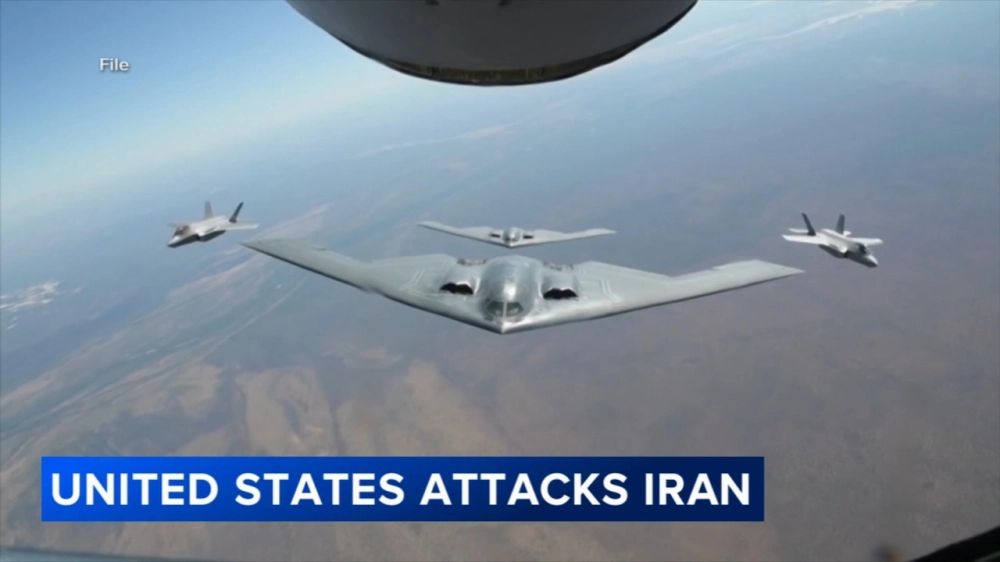

The United States and Israel launched military operations against Iran on February 28. Nearly a month later, the war is reshaping the Middle East, rattling global energy markets, and dividing opinion in Washington. Here is the clearest picture we can give you.
Nobody who has been following the news closely over the past three weeks should be surprised that it came to this. The warnings were there. The ultimatums were issued. The diplomatic window opened, closed, opened again, and then slammed shut on the night of February 28, when American bombs began falling on Tehran.
What has surprised almost everyone — analysts, allies, and arguably the administration itself — is how fast things have escalated, how messy the picture has become, and how few good options anyone seems to have left.
Here is what we know as of Friday, March 20.
How it started
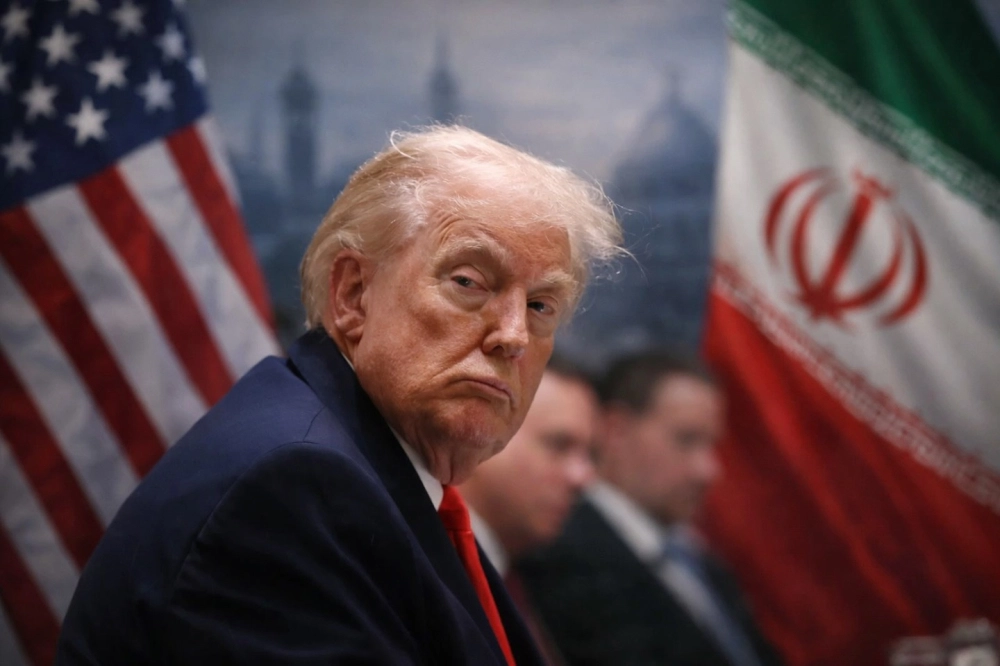
The United States military began major combat operations in Iran on February 28, 2026. President Trump cited the Iranian regime’s nuclear ambitions and decades of hostility toward American forces as justification for the strikes.
Trump framed the decision as the conclusion of a long effort to prevent Iran from obtaining a nuclear weapon. He referenced Operation Midnight Hammer — carried out last June — which he said had already destroyed Iran’s nuclear facilities at Fordow, Natanz and Isfahan. The February 28 operation, he said, came after Iran refused to make a deal and resumed what the administration described as threatening behavior.
The strikes began with air and naval operations targeting Iranian military infrastructure, missile stockpiles, and naval assets. Israel joined the campaign immediately.
Where things stand now
Three weeks in, the scale of the operation is staggering.
The US military has carried out more than 7,800 strikes since the war began and has damaged or destroyed more than 120 Iranian naval vessels, according to figures released by US Central Command, which oversees roughly 50,000 American troops in the region.
Iran says more than 1,300 civilians have been killed and nearly 10,000 civilian sites have been bombed since the conflict began. The US and Israel dispute those figures and their characterization. Independent verification inside Iran is extremely difficult.
Iranian targets hit include Tehran’s Mehrabad Airport, while Iran has continued retaliatory strikes on Israel and US assets across the Gulf region.
The human cost on both sides is rising. American military deaths have been confirmed, though exact numbers remain classified. Trump acknowledged casualties publicly this week, describing the losses as the price of what he called a noble mission.
Trump’s leadership is being questioned – and not just by Democrats
Perhaps the most striking development of the past week has not been military. It has been political.
Trump said Friday that US strikes have eliminated several layers of Iranian leadership. “Their leaders are all gone. The next set of leaders are all gone. And the next set of leaders are mostly gone,” he told an audience at the White House. He added: “We want to talk to them and there’s nobody to talk to.”
That statement has alarmed foreign policy experts across the political spectrum. Eliminating a government’s entire leadership structure without a clear plan for what follows is a scenario that carries enormous risk — as the United States learned in Iraq.
In Washington, lawmakers are demanding public hearings on the war’s goals and questioning the administration’s strategy as US casualties rise and civilian strikes come under investigation.
Meanwhile, Trump is openly feuding with America’s closest allies. He called NATO members “COWARDS” on social media for declining to help keep the Strait of Hormuz open, saying the waterway could be reopened with a “simple military maneuver” if allies had the courage to help.
The Strait of Hormuz and the energy crisis
If there is one dimension of this war that touches every American directly – regardless of their views on the military campaign – it is energy.
The Strait of Hormuz is the narrow waterway through which roughly 20 percent of the world’s oil supply passes every day. Iran has repeatedly threatened to close it. The US has insisted it will stay open.
Israel struck Iran’s South Pars gas field this week – a facility shared with Qatar – triggering a sharp market reaction. Oil prices climbed above $97 per barrel for US crude, while Brent crude rose to $111.87 a barrel, a jump of 4 percent in a single day.
One analyst described the latest escalation as “a turning point for markets because the conflict is no longer just about military headlines or Strait of Hormuz closure.” Stock markets across Asia and Europe fell sharply in response.
For American households, this means higher gas prices at a time when inflation was already a politically sensitive issue. The connection between what is happening in the Persian Gulf and what Americans pay at the pump is direct and unavoidable.
Can the US sustain this militarily?
A question that has received less attention than it deserves is whether the American military can maintain the pace of operations it has set.
Trump said in early March that the US military intends to sustain its assault for “four to five weeks” if necessary, insisting it “won’t be difficult” to maintain intensity.
Military analysts are less confident. Concerns have been raised about American ammunition stockpiles — a problem that predates this conflict. One analyst quoted the assessment that weapons are being “used faster than we can replace them.” These concerns were already present during the period when the US was supplying Ukraine.
The Trump administration is now considering deploying thousands of additional troops to reinforce operations in the Middle East, according to Reuters, which cited US officials and people familiar with the planning. Any ground deployment would represent a significant escalation and a political liability for a president who campaigned on keeping America out of foreign wars.
What Iran is doing
Iran has not collapsed, surrendered, or gone quiet. It has struck back.
Iranian forces have attacked military intelligence headquarters in Israel, a naval base in Haifa, and radar systems. Iran’s Revolutionary Guard has struck vessels in the Strait of Hormuz, including a Liberia-flagged ship it identified as Israeli-owned.
The UAE said its air defenses intercepted seven Iranian missiles and fifteen drones in a single day as Iran unleashed waves of strikes on Gulf states.
Inside Iran, the government is tightening its grip. The police chief warned that anyone seen as supporting the country’s enemies would no longer be treated as a protester but as an enemy of the state.
A new supreme leader has also been named — Mojtaba Khamenei — following what Iranian officials have described as leadership losses from the strikes. Hamas congratulated the new Iranian leader and expressed support for the war effort.
The international picture
The world is watching — and not staying silent.
China has strongly condemned the strikes, calling on all parties to return to dialogue and describing the civilian casualties as deeply unacceptable. Chinese Foreign Minister Wang Yi argued that launching military attacks while negotiations were ongoing was “unacceptable.”
The World Health Organization has warned about a phenomenon being described as “black rain” — toxic contaminated rainfall caused by smoke from burning Iranian oil facilities mixing with rain clouds — which it says poses serious public health risks to civilians in affected areas.
Russia has called for an immediate ceasefire. European governments have expressed varying degrees of alarm. None of America’s traditional allies have joined the military campaign.
What we still do not know
There are things nobody can honestly tell you right now.
We do not know what the actual US casualty figures are — the administration has been vague. We do not know what Iran’s real military capacity looks like after three weeks of strikes. We do not know whether the leadership eliminations Trump described will lead to a negotiated end to the conflict or to a power vacuum that creates new and unpredictable dangers.
And we do not know what the administration’s endgame actually is. “Eliminating the nuclear threat” was the stated goal on February 28. Three weeks later, with Iranian leadership described as largely gone and no clear negotiating partner in sight, what does success look like?
That question does not yet have an answer. And until it does, the bombs will keep falling, the oil prices will keep rising, and the casualty counts on all sides will keep climbing.
Matzapich will continue updating this story as events develop.